




Why we design bags for movement, not outfits

Real life doesn’t stand still.
Most days involve walking, bending, reaching, carrying, sitting on steps, weaving through crowds, juggling bags and bodies and plans. Even the quieter seasons of life still ask us to move — just differently.
And yet, so many bags are designed as if the wearer will remain upright, still, and perfectly styled at all times.
That’s never really been our reality.

Outfits are static. Life isn’t.
There’s nothing wrong with designing something to look beautiful. We care deeply about how things look. But when design begins and ends with an outfit — a mirror moment, a still pose — something gets lost.
A bag that looks great standing still can become awkward very quickly once you start moving.
It slips off shoulders.
It swings when you walk.
It digs in when you sit.
It needs adjusting every few minutes.
Over time, that friction adds up.
We’ve always felt that if a bag constantly asks for your attention, it’s not doing its job.

What movement actually asks of a bag
Designing for movement changes the questions you ask.
Instead of “Does this look good?” you start asking:
-
How does the weight sit on the body?
-
Does this stay close when you walk?
-
Can your hands stay free?
-
Does it adapt to different bodies and different days?
-
Does it move with you — or fight against you?
Small details matter more than they seem.
Where a strap sits.
How long it can adjust.
Whether the bag shifts when you bend or climb or dance.
Good functional design isn’t flashy. When it’s working properly, you barely notice it.

The design choices that follow
Once movement becomes the starting point, design decisions fall into place naturally.
Hands-free wear stops being a feature and becomes essential.
Adjustable straps stop being optional.
Pockets are placed for balance, not symmetry.
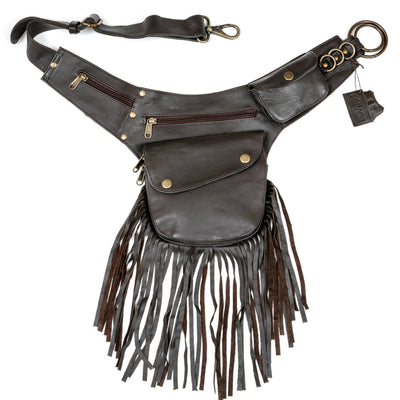
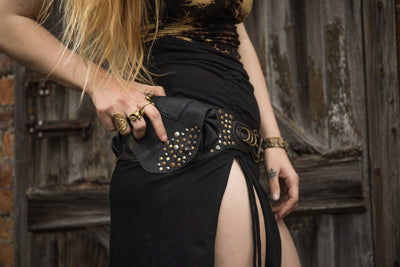
Bags are shaped to sit against the body, not hang away from it.
This is why we return to adaptable designs again and again — pieces that can be worn in different ways depending on where the day takes you.
It’s also why we care less about creating the perfect look and more about creating something that earns its place in your daily life.

One bag, many lives
Life rarely stays in one lane.
The same bag might be worn to a festival one year, slung on for everyday errands the next, and relied on constantly once hands are needed elsewhere. Work changes. Bodies change. Priorities shift.
Designing for movement allows one piece to move through those seasons with you.
Not because it’s trying to be everything — but because it was designed with real use in mind from the beginning.

Design that supports, not interrupts
We don’t believe a bag should dominate your day.
The best designs are the ones you stop thinking about once you put them on. They don’t interrupt your movement, your focus, or your rhythm. They simply do their job — quietly, reliably — while you get on with living.
That’s why we design bags for movement, not outfits.
Because life happens in motion.




Leave a comment