




Is vegan leather actually better for the environment?

Looking beyond the label
Over the past few years, vegan leather has been widely promoted as a more ethical alternative to traditional leather. Many brands highlight it as a cruelty-free and environmentally friendly option, and for many people that feels like an obvious choice.
But as with most things in fashion, the reality is a little more complicated.
When people begin to look more closely at what vegan leather is made from and how it behaves over time, the conversation becomes less about a simple “better or worse” answer and more about understanding the trade-offs involved.

What most vegan leather is made from
The term “vegan leather” covers a wide range of materials.
Some newer versions are made from plant-based fibres such as cactus, apple waste, or pineapple leaves. These materials are still evolving and are often produced in relatively small quantities.
However, the majority of vegan leather used in fashion today is made from synthetic materials — usually polyurethane (PU) or coated fabrics. These are essentially plastic-based materials designed to mimic the appearance of leather.
They can look convincing, especially when new, but they tend to behave differently over time.
The durability question
One of the most important differences between leather and many synthetic alternatives is durability.
Leather is a natural material that often softens, develops character, and can be repaired or restored. Synthetic materials can vary widely in quality, but many eventually crack, peel, or break down.
When a product reaches the end of its life quickly, it often needs to be replaced sooner. From an environmental perspective, this shorter lifespan can become part of the overall impact.
This doesn’t mean vegan leather is automatically worse — but it does mean longevity is an important part of the conversation.

New plant-based materials
There has been exciting innovation in recent years around plant-based alternatives to leather.
Materials like Piñatex (made from pineapple leaves), mushroom-based leathers, and cactus leather aim to create more sustainable options. Many of these materials still contain some synthetic components to give them durability and structure.
We actually experimented with Piñatex ourselves when developing one of our bags. While it’s a fascinating material, we found that to achieve the durability we wanted it would have pushed the price much higher, and we weren’t completely confident it would stand up to years of wear in the same way.
For us, durability remains a key factor when deciding what materials to work with.
The importance of longevity
One aspect of sustainability that often gets overlooked is simply how long something lasts.
A bag that is used every day for many years spreads its environmental impact over a long period of time. Materials that can age well, be repaired, and continue working often have an advantage here.
Longevity isn’t the only factor in sustainability, but it’s an important one — especially in a world where so many products are designed to be replaced quickly.

How we approach material choices
When it comes to materials, we try to look beyond simple labels.
“Vegan” doesn’t automatically mean environmentally friendly, and “natural” doesn’t automatically mean impact-free. Every material has strengths, weaknesses, and trade-offs.
Over the years we’ve explored different options, including plant-based materials like Piñatex. While these innovations are exciting, we found that achieving the durability we wanted would have pushed the price much higher, and we weren’t fully confident the material would stand up to years of everyday use.
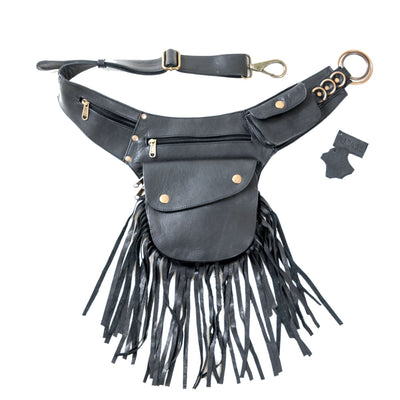
For us, durability remains one of the most important factors when choosing materials. A bag that lasts for many years, develops character, and continues to work well over time can ultimately be a more responsible choice than something designed to be replaced quickly.
Our goal isn’t to claim a perfect solution, but to be open about how these decisions are made — and to keep learning as new materials continue to develop.
A more balanced way to think about materials
The conversation around materials is evolving quickly, and that’s a good thing.
Plant-based innovations are improving, new ideas are emerging, and more people are asking thoughtful questions about where things come from.
Rather than looking for a single “right” material, many people are now thinking about durability, repairability, waste, and long-term use.
Those questions often lead to more balanced decisions — and to products that are chosen carefully and used well.
If you’re interested in the wider ethical conversation around leather, we’ve also written about whether buying leather can ever be considered ethical.





Leave a comment